
Professional Business Communication and Presentation Training
In a fast-paced corporate environment, the ability to convey information accurately and persuasively is the competency that distinguishes an outstanding executive. This program is designed to help professionals structure effective messages for clients, colleagues, and boards of directors.

The Art of Presentation for Stakeholders
Presenting to a board of directors or investors requires a different approach compared to presenting to an internal technical team. We teach how to highlight strategic value, cost efficiency, and growth potential, which are typically the main focus of top-level decision-makers.
Participants are trained to answer critical questions calmly and provide relevant supporting data without getting bogged down in excessive detail. You will learn to map your audience first — who has the decision-making power, what are their concerns, and what metrics do they use to evaluate a proposal — before structuring the presentation flow.
Exercises include techniques for drafting an executive summary at the beginning of the session, preparing anticipated answers for the three to five most likely questions, and how to close a presentation with a call for a concrete decision, rather than just a summary.

Pitching and Contract Negotiation Techniques
The ability to win over clients during a bidding session is a communication art that is highly valuable for sales and business development teams. Our training covers how to build rapport with prospective partners, strategic questioning techniques to uncover their needs, and how to close negotiations with mutually beneficial results.
The main focus is on delivering your company's unique selling point in an elegant yet competitive way in the market. Participants practice structuring their pitch narrative in three layers: the client's problem, the proposed solution, and evidence that the solution has succeeded in similar contexts.
For negotiations, participants are trained to distinguish interests from positions — what the other party is asking for versus what they actually need — as well as practicing techniques for making gradual concessions so that every step appears as an effort, not a surrender.

Assertive Communication in the Workplace
Friction often occurs in the workplace due to communication styles that are too aggressive or too passive when expressing opinions. We equip participants with assertive communication techniques, which is the ability to express one's desires and boundaries clearly while still respecting the other party.
This skill is essential for conflict management, providing constructive feedback, and maintaining a healthy work culture in large organizations. Participants practice using the assertive communication formula: observing the situation without judging, expressing feelings without blaming, and stating needs without threatening.
Practice sessions include simulations of giving feedback to colleagues, refusing unrealistic requests from superiors, and how to express disagreement in meetings without damaging work relationships.
Good business communication is not about hiding facts, but about structuring facts in an order that helps the audience make decisions.
Sarhangi Institute Teaching Principles

Effective Business Message Writing
Business communication is not limited to verbal speech, but also includes written messages such as emails, proposals, and monthly reports. We provide guidance on concise writing structures, the use of a professional tone, and how to avoid ambiguity in work instructions.
Participants are taught to respect the reader's time by getting straight to the point while maintaining polite language in all formal correspondence. Exercises include drafting one-paragraph emails that immediately state a request, writing one-page executive summaries for proposals, and formulating work instructions that do not lead to double interpretations.

Leading Productive Meetings
Much of a company's time is wasted due to meetings that are unfocused and dominated by debates that do not lead to concrete decisions. This module teaches the role of a moderator or meeting leader in keeping the discussion on agenda, facilitating participation from all attendees, and summarizing discussion results into action items.
With good facilitation techniques, you can ensure that every meeting provides real added value to the progress of company projects. Participants practice drafting agendas with time allocations per item, managing dominant participants, inviting opinions from quiet members, and closing meetings with a summary of decisions and those responsible.
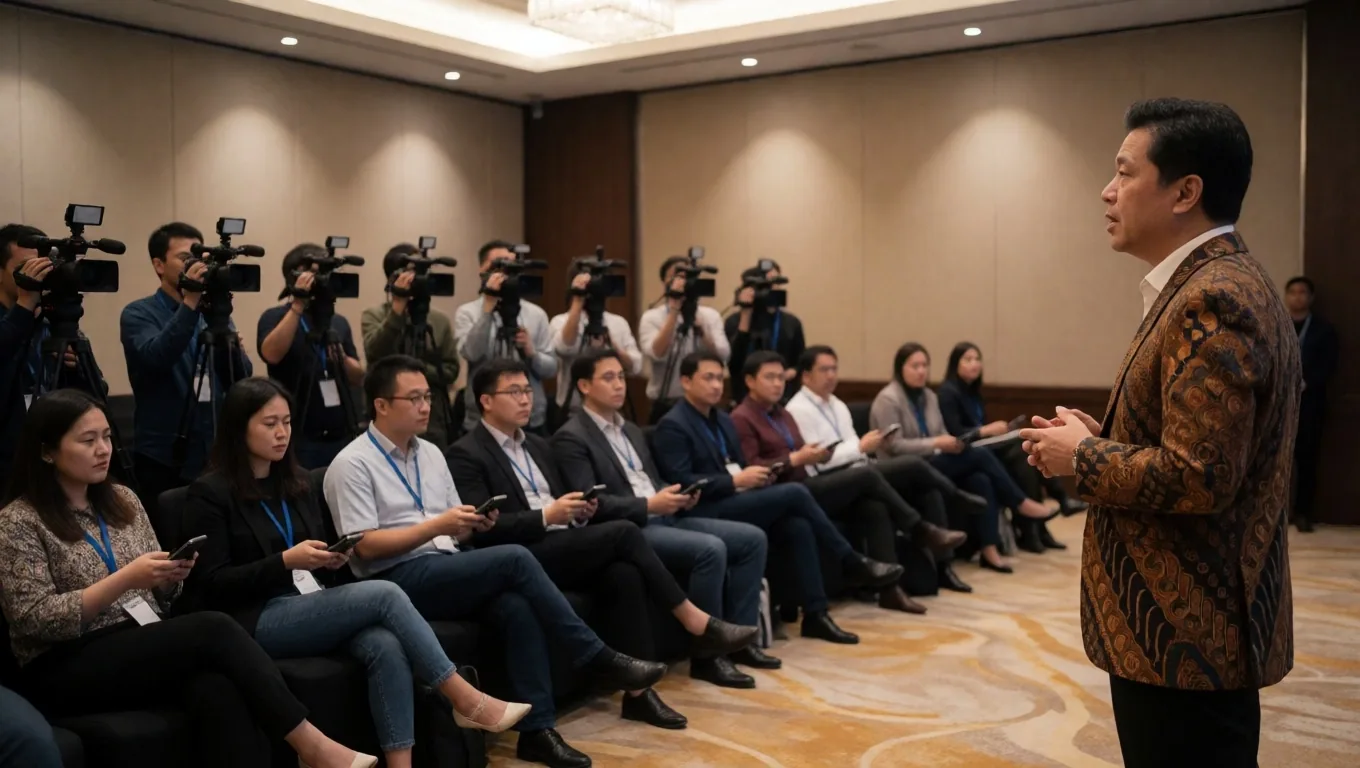
Public Relations and Media Communication
For company representatives, the ability to speak to the mass media is a great responsibility because it concerns the reputation of the institution as a whole. We train bridging techniques—redirecting difficult questions back to the main point—and how to draft press statements that are safe yet informative for the public.
Participants are taught how to manage a positive company image through the right choice of words when facing a crisis or when announcing major achievements in front of journalists. Exercises include interview simulations with sharp questions, drafting key messages in three easy-to-quote points, and techniques for maintaining a calm tone while the camera is on.
Communication Amidst Change, Business Ethics, and Digital Tools
Communication Amidst Organizational Change
When a company undergoes transitions such as mergers, acquisitions, or leadership changes, transparent communication is key to keeping employee morale stable. We provide strategies on how to deliver bad news empathetically yet honestly, as well as how to build a vision for the future that can be accepted by all levels of the organization.
This ability is essential for middle to upper-level managers to minimize resistance and uncertainty within work teams.
Business Ethics and Corporate Diplomacy
Professional communication cannot be separated from the ethical norms and politeness that apply in today's diverse global business ecosystem. We emphasize the importance of maintaining the integrity of speech and behavior in every business interaction to build a solid long-term reputation for yourself and the company.
Participants are also taught the basic principles of diplomacy for dealing with business partners from different cultural backgrounds to avoid harmful misunderstandings.
Use of Digital Communication Tools
In the era of remote work, mastery of communication tools such as video conferencing platforms and project management applications has become an integral part of business communication. We provide tips on how to remain professional during online presentations, background settings, and how to maintain audience engagement in a virtual space full of distractions.
Focus is placed on the effectiveness of message delivery through computer screens without reducing the authority and clarity of the information provided.

Real Business Case Simulations
To ensure deep understanding, each participant will be given a business scenario that must be resolved through the communication strategies previously learned. Scenarios can range from handling a very angry client complaint, presenting innovative ideas to a skeptical boss, to negotiating prices with a new supplier.
Direct evaluation from the instructor will help participants realize their strengths and areas that need improvement in their respective business communication styles. Each simulation is recorded and reviewed together, so participants can see for themselves their expressions, posture, and speech patterns from the audience's point of view.
Improve Your Business Skills with Expert Instructors
The Sarhangi Institute Business Communication program is designed for executives, managers, sales teams, and company representatives who want to convey messages with authority and clarity. Consult on corporate training needs for your team or learn about our learning approach before registering.