Chapter II — Academic Framework
Learning Methods and Academic Curriculum
Sarhangi Institute combines classical linguistic theory with dynamic interactive simulations in the classroom. Our curriculum is structured under the supervision of the Pasha ABK Learning and Therapy Institute (NPSN K5653296) to ensure every material has an academically accountable pedagogical foundation.
Curriculum Module List
Practice-Based Approach
Seventy percent hands-on practice
Video Feedback
Second-by-second analysis by instructors
Modular Curriculum
One competency per module
Small Group Classes
Low instructor-to-student ratio
Real-Scenario Simulations
Debates, press conferences, pitches
Technology Integration
Digital voice analysis
Evaluation & Certification
Final competency exam
Module 01
Practice-Based Learning Approach
At our institute, theory takes up only about thirty percent of the total meeting time, while the rest is dedicated to hands-on practice in front of an instructor. Speaking skills can only be honed through consistent repetition and timely correction, so that incorrect speaking habits do not become permanent.
Participants are encouraged to actively speak from the first day of training. Confidence grows organically through real experience in the classroom, not through memorizing rhetorical theories that are never tested in front of others. Every mistake that arises during practice becomes a direct correction material that is far more effective than reading theoretical guides.
Theory Portion
± 30%
Introduction to concepts, rhetorical frameworks, and basic linguistic principles.
Practice Portion
± 70%
Live speaking, real-time correction, and structured repetition.

Second-by-Second Analysis
Instructors review every second of the recording to identify patterns the participant is unaware of.
Module 02
Video Feedback System
Every presentation or speech practice session is recorded to serve as material for joint evaluation. By watching themselves, participants can realize mistakes in body language, facial expressions, and intonation that are difficult to feel while speaking.
Instructors provide an in-depth second-by-second analysis of the recording, giving specific guidance on which parts need improvement and which parts are good and should be maintained. This process turns unconscious mistakes into concrete and measurable lessons.
Recording of every practice session, not just the final exam session.
Visual correction of body language, pauses, eye contact, and intonation.
Specific direction: what to improve and what to maintain.
Module 03
Structured Modular Curriculum
The training material is divided into small modules that make it easy for participants to focus on one specific aspect of competence before moving to the next level. This structure prevents an excessive information overload, making the knowledge absorption process more optimal for participants from various professional and academic backgrounds.
Single Focus
One Competence per Module
Each module targets one specific skill—such as intonation, sentence structure, or pause management—so that participants are not distracted by too much material at once.
Teaching Materials
Guides & Worksheets
Each module is equipped with an exclusive guidebook and practical worksheets that can be used as a reference after the training is finished, rather than just material that disappears after the class ends.
Progression
Gradual and Measurable
Participants only move to the next module after the competence in the current module is achieved, ensured through a short evaluation at the end of each unit.
Module 04
Small Group Learning
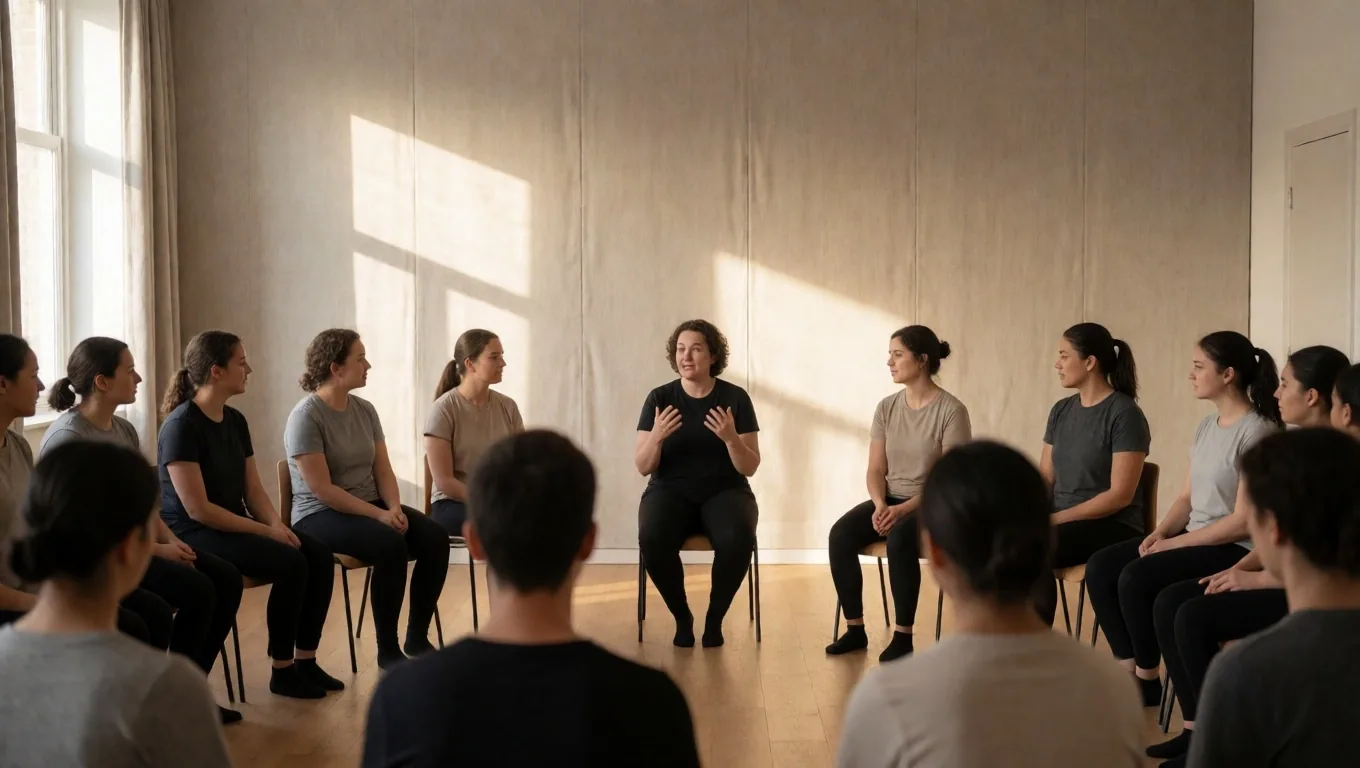
We keep the ratio between instructors and participants low to ensure everyone gets personal attention and sufficient practice time during the session. In small groups, participants feel more comfortable experimenting, asking questions, and providing feedback to one another.
A classroom atmosphere that is intimate yet disciplined helps reduce the mental pressure often experienced by novice speakers. Participants do not feel judged, but rather supported—and it is precisely in these low-pressure conditions that speaking ability develops most rapidly.
Peer feedback becomes part of the learning process. When someone hears a colleague experiencing the same difficulties, psychological barriers are reduced and the courage to try new techniques increases.
Class Principles
Why Small Groups Are More Effective
Personal attention
Instructors can observe and correct each participant directly in every session.
Sufficient practice time
Each participant gets an adequate portion of speaking time, rather than just listening to others.
Low mental pressure
An intimate atmosphere reduces the fear of making mistakes that hinders novice speakers.
Module 05
Real-World Scenario Simulation Sessions
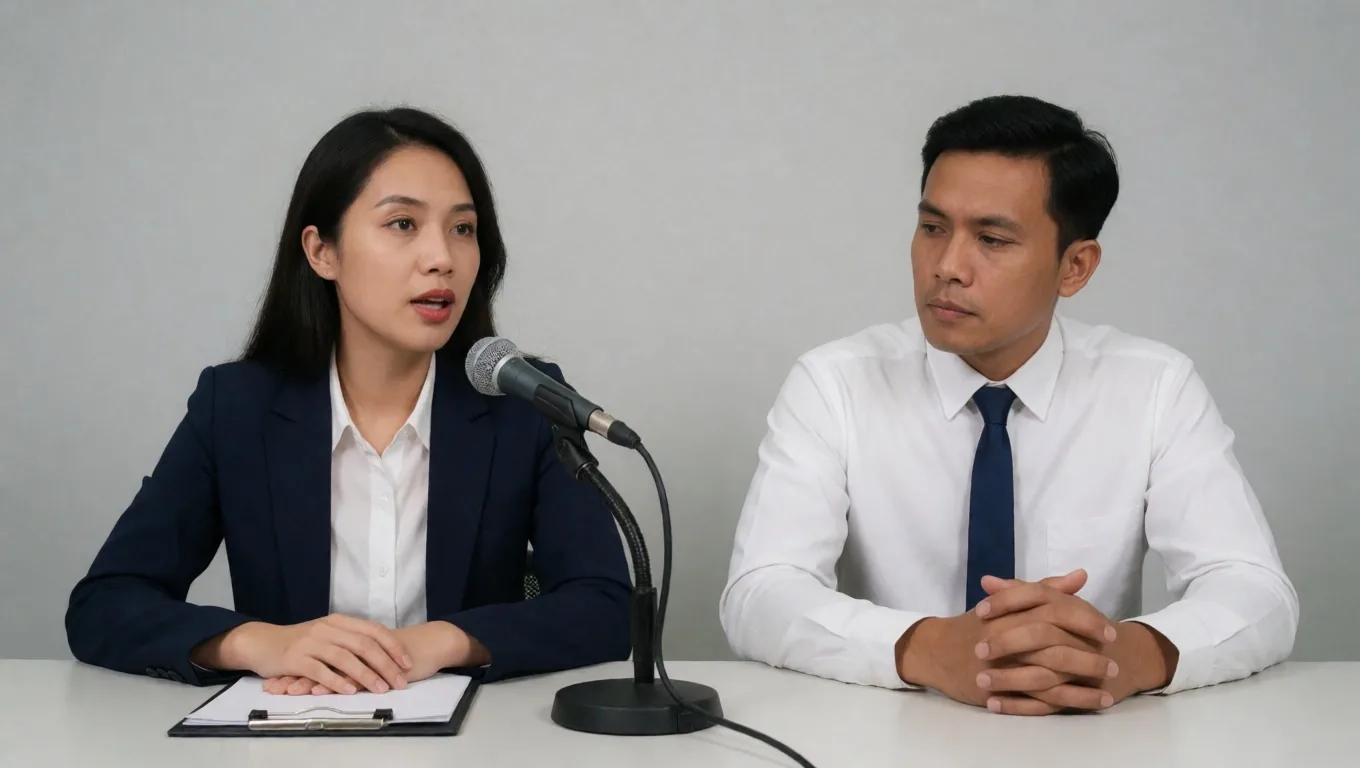
Our curriculum includes various challenging scenario simulations, ranging from formal debates and press conferences to elevator pitches in competitive business environments. These simulations are designed to be as similar as possible to the real situations participants will face in the field after graduating from our training program.
Through artificial pressure in the classroom, participants learn to manage their emotions and think clearly when they have to provide verbal responses spontaneously. When high-pressure situations have been experienced in the practice room, the panic that arises on the actual stage can be significantly suppressed.
Scenario A
Formal Debate
Scenario B
Press Conference
Scenario C
Elevator Pitch
Scenario D
Spontaneous Response

Module 06
Technology Integration in Learning
We use voice analysis software and interactive applications to help participants visualize their own speech rhythm and intonation patterns digitally. This technology provides objective data on voice frequency and pause duration, which are often difficult to measure manually with ordinary human hearing.
The use of these digital tools accelerates the process of technical articulation and vocal improvement, making it more accurate and data-verifiable. Participants do not just rely on the instructor's perception, but also have an objective record of their progress from week to week.
Objective data complements the instructor's subjective corrections. Participants see their own intonation patterns on the screen, then correct them with full awareness—not just following instructions without understanding the reasons why.
Module 07
Periodic Evaluation and Competency Certification
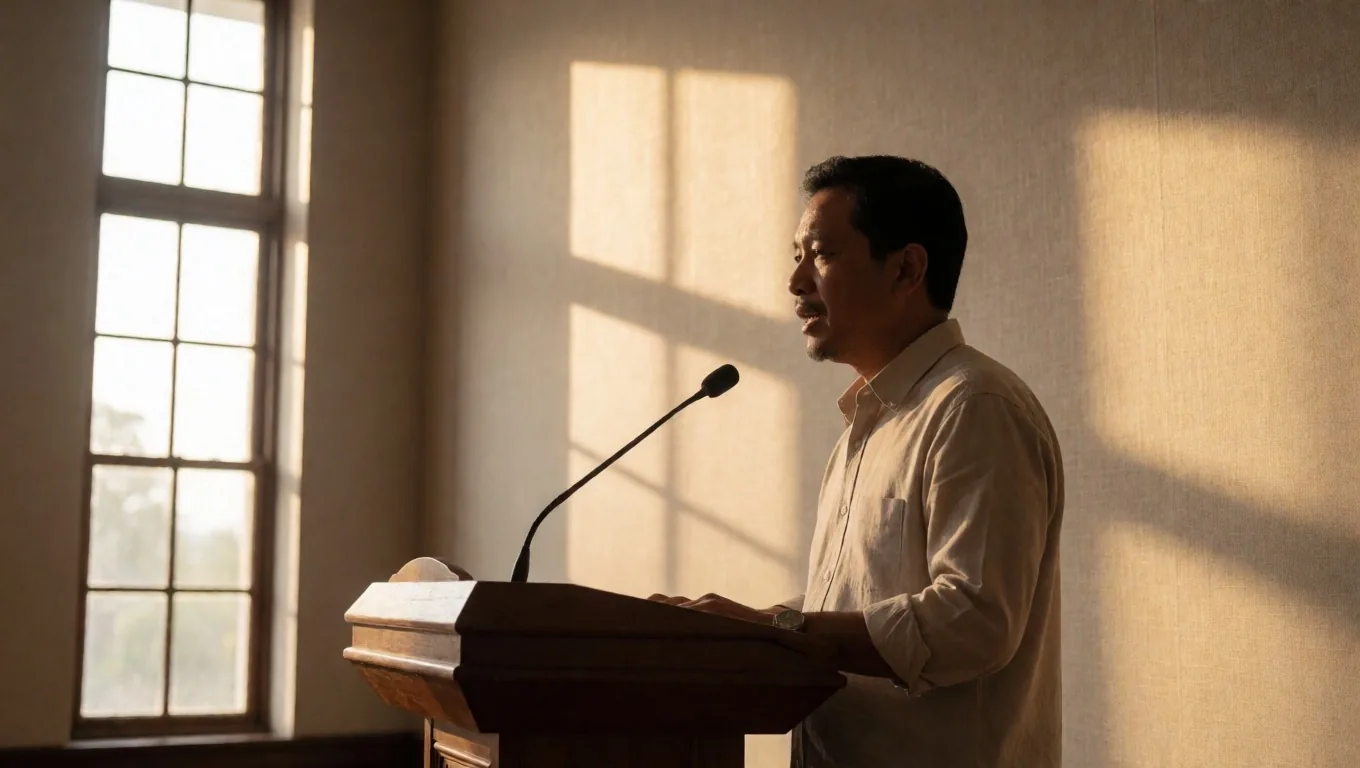
Each participant's progress is monitored through a continuous assessment system that covers technical aspects, message substance, and confidence when appearing on an official podium. At the end of the program, participants must take a final competency exam that tests all the material learned during the duration of the course taken.
Assessment Aspect A
Vocal Technique
Articulation, intonation, volume, speaking speed, and breath quality measured during the performance.
Assessment Aspect B
Message Substance
Argument structure, clarity of ideas, content relevance, and the ability to answer audience questions.
Assessment Aspect C
Confidence
Body language, eye contact, ability to manage pressure, and stage presence when speaking in public.
An official certificate is issued as recognition of the achievement of competency standards established by the institution in accordance with our educational operational permit. This certificate reflects the completion of all modules and the final exam, not a guarantee of specific results in each participant's professional environment.
Module 08
Mentoring and Personal Guidance
In addition to regular class sessions, we provide extra consultation time for participants who feel they need special guidance to overcome more specific speech barriers. Our instructors act as mentors who provide moral and technical support, helping participants map out their career development paths through the power of communication.
This mentoring relationship often continues even after the program ends, creating a strong professional bond between instructors and alumni. Many alumni return for consultation when facing new communication challenges at different stages of their careers.
Additional Consultation
One-on-One Sessions
Special time outside of class hours to discuss specific barriers—for example, extreme nervousness before an important presentation, or certain vocal habits that are difficult to overcome in group sessions.
Alumni Network
Post-Program Guidance
Mentoring does not stop when the certificate is issued. Alumni can contact mentors when facing new communication situations at the next level of their career.

Module 09
Curriculum Adaptation for Special Needs
Every company or group has unique needs that are not always accommodated in the standard curriculum available to the general public. We offer a customization service for training materials tailored to the industry profile, audience, and specific communication challenges faced by the organization.
This adjustment includes the terminology used, case studies discussed, and even the duration of the training, which can be arranged to be more flexible and efficient. A marketing team will require a different communication approach than an engineering or legal team—and our curriculum adapts to that context.
Module 10
Lifelong Learning Culture
Communication ability is a journey that never ends and always requires sharpening as times change. Our graduates are encouraged to continue learning through access to resources such as articles, video tutorials, and advanced workshops available exclusively to the Sarhangi Institute alumni family.
This spirit of continuous self-improvement is what we want to instill in every individual who enters our educational institution. Formal training is a starting point, not an end point—and we are committed to continuing to provide learning resources for those who want to maintain the sharpness of their communication in the years to come.
Resources
Articles & Videos
Advanced materials shared periodically with alumni to deepen the techniques that have been learned.
Community
Alumni Network
A space to exchange experiences with fellow graduates from various professional and industrial backgrounds.
Development
Advanced Workshops
Periodic in-depth sessions for advanced communication techniques not included in the basic curriculum.
Next Steps
Choose the Right Training Path
After understanding our methodological framework, you can explore specific training programs that apply this method, or contact us to consult on the path that best suits your needs.
Questions about our methods or curriculum? Contact Sarhangi Institute by phone at 0313975814 or email pashaabkcenter@gmail.com, Monday–Saturday from 08:00–17:00 WIB.